Incubator cover
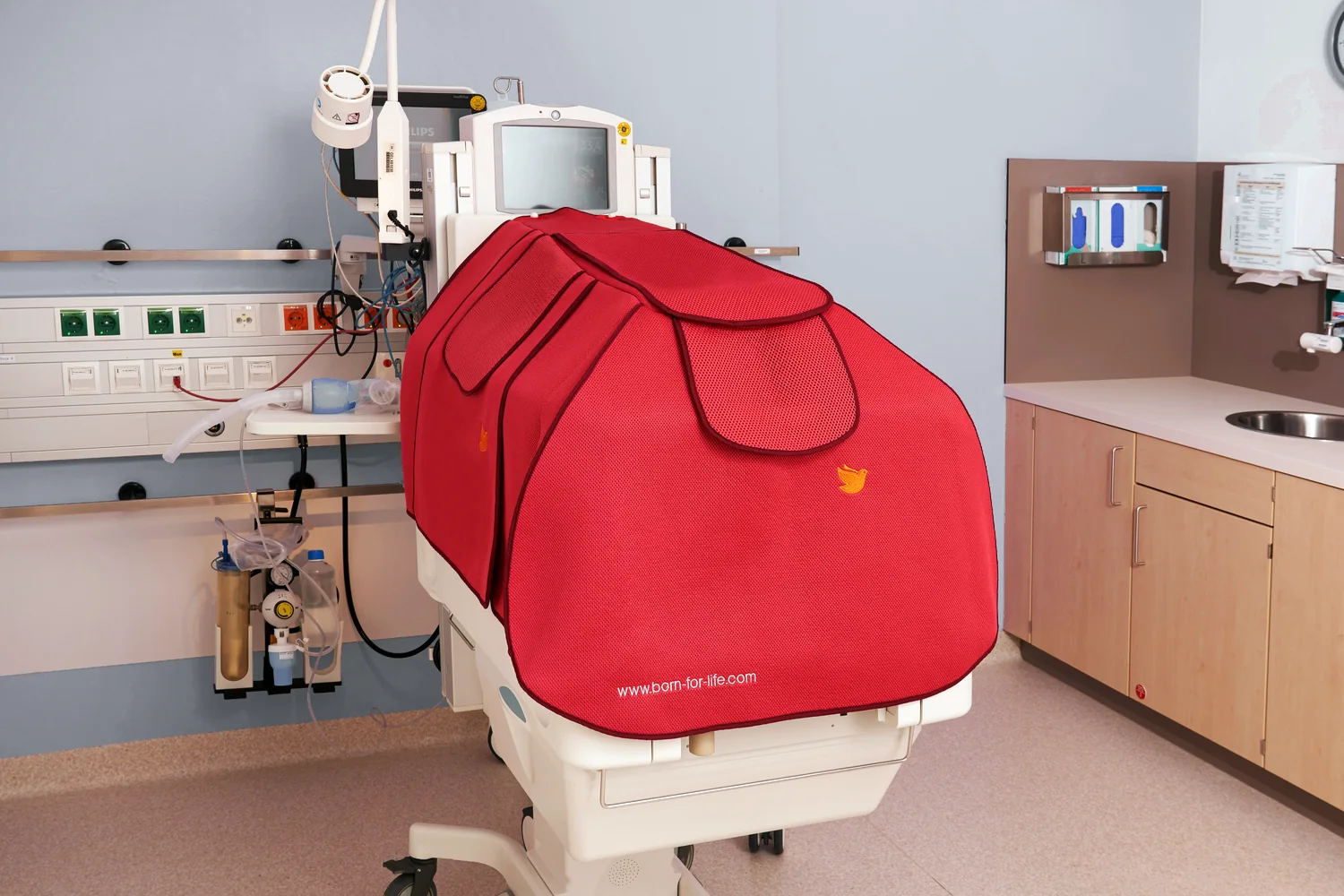
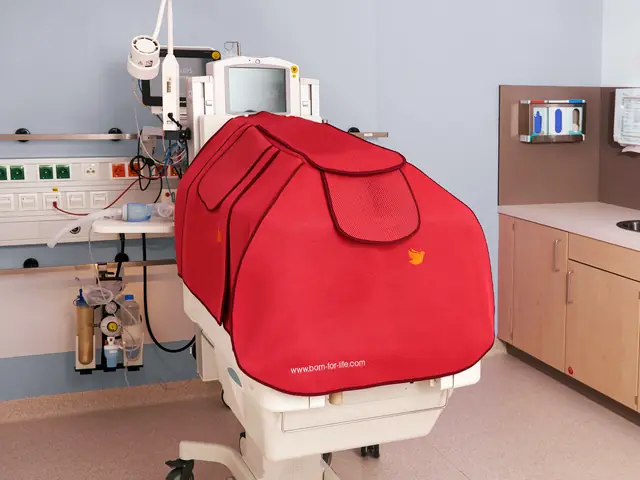
Laid over the incubator, the incubator cover protects preterm, small-for-gestational-age and newborn babies from stressors such as noise and bright light.
- Class I medical device, MPDG/MDR
- Developed and made in Germany
- Delivered on request
- Price
- On request
- Material
- Spacer fabric, 100% polyester
- Fits
- Dräger Caleo, GE Giraffe Omnibed
The model must match your incubator.
What makes the incubator cover special
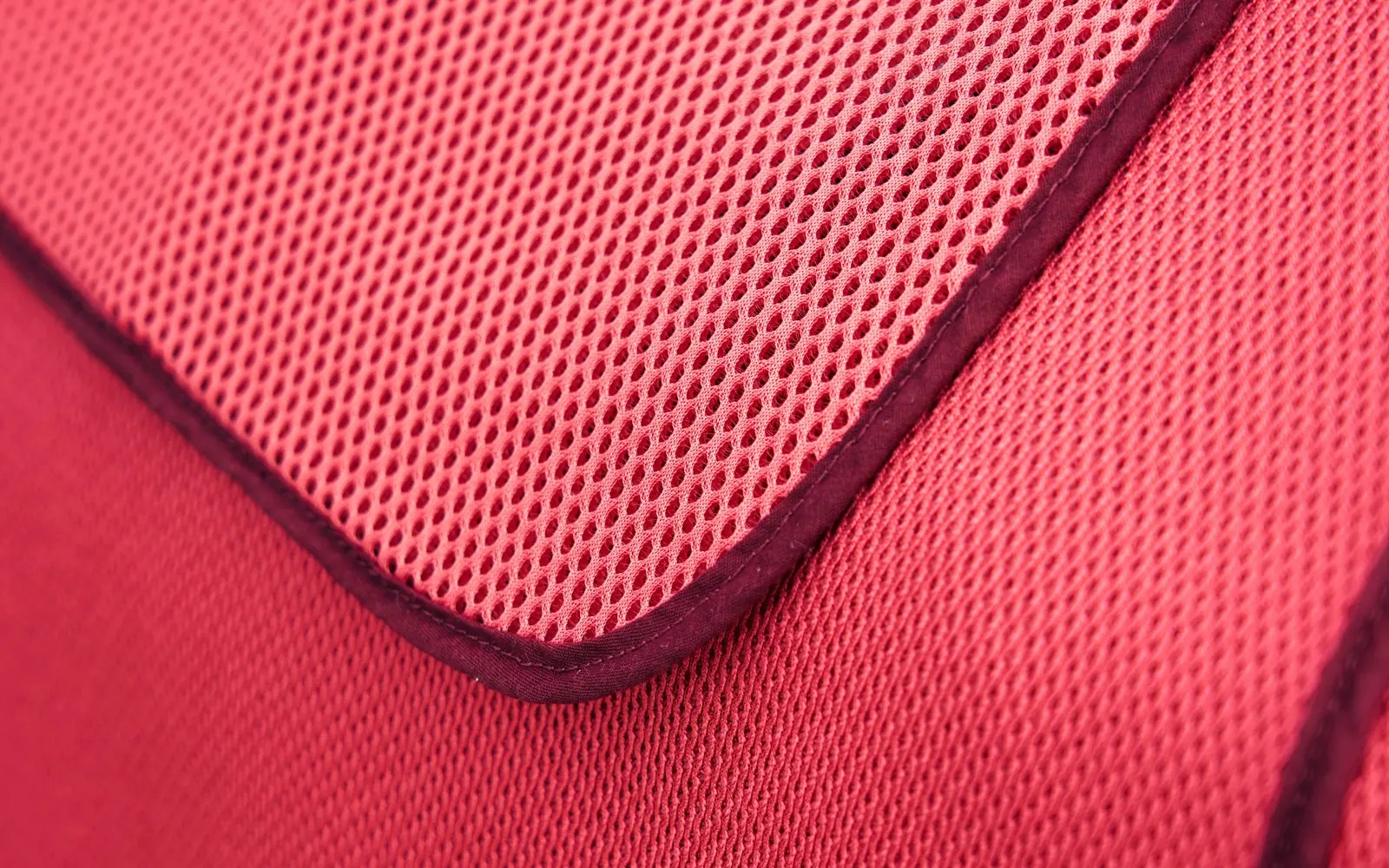
Fine-meshed spacer fabric dampens loud noises and direct light.
- Stress reductionWe expect less stress, because stress-inducing events are reduced.
- Healthy sleepWe expect it to support healthy sleep.
- Day and nightThe viewing flaps and the lid flap let a little light in and tint it reddish. This lets the baby get used to visual stimuli and to the rhythm of day and night.
- Care in dimmed lightThrough the small viewing flaps you can look in without disturbing the baby with too much light. The side flaps can be opened one at a time.
How the incubator cover is made
Depending on the model, three or four large panels of spacer fabric, plus three small viewing flaps and a lid flap.
- Large panelsThey overlap, so the incubator can be fully screened from view. The side panels wrap around the head end, so less light gets in there too.
- Fold up instead of removingFolding up a panel exposes the openings of the incubator, so it can be opened without obstruction.
- Three viewing flapsThe large side panels have oval windows. Viewing flaps cover them and simply fold up.
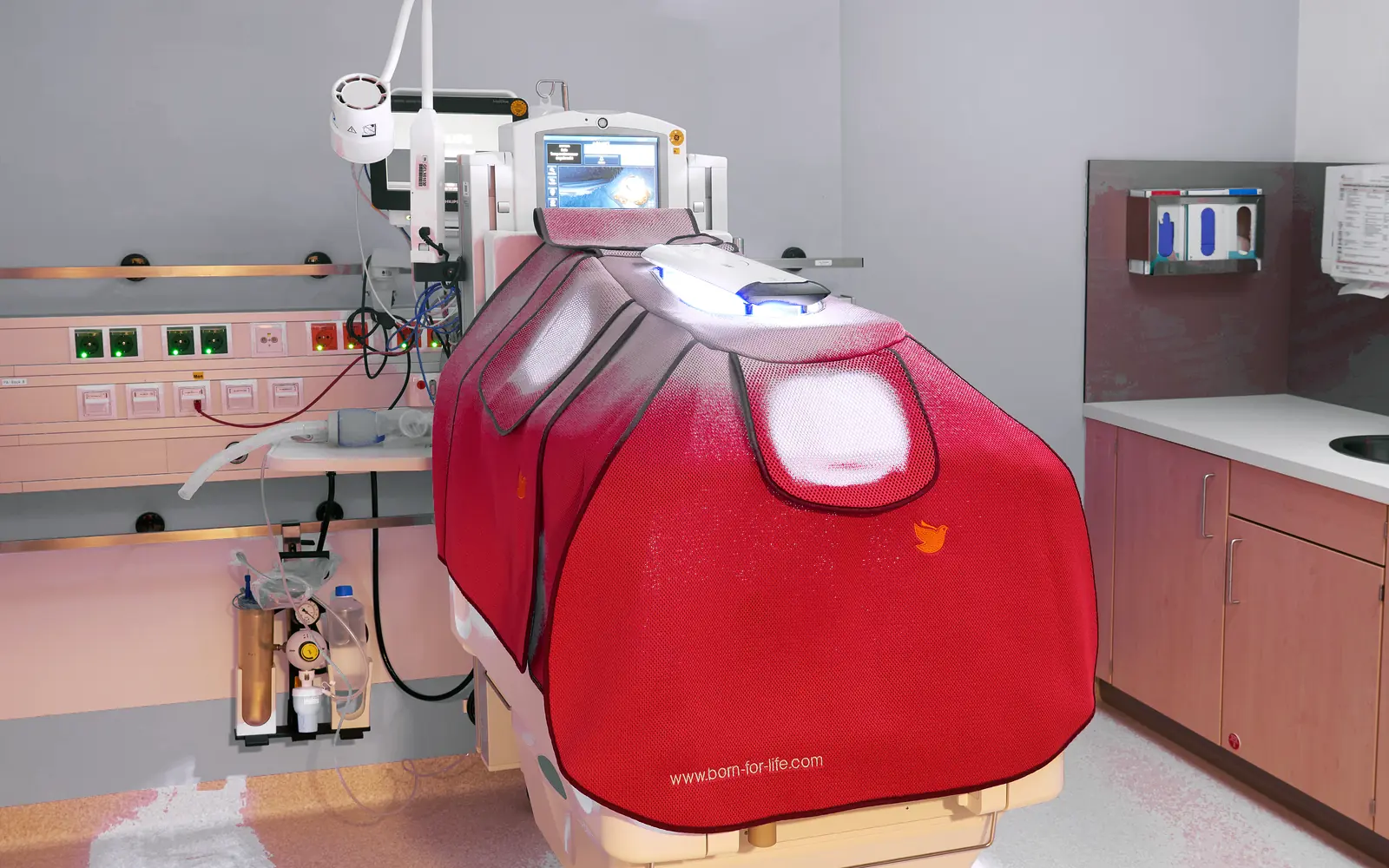
- Lid flap for phototherapyA large oval opening sits above the lid. It is opened for phototherapy, for example to treat hyperbilirubinaemia, so the lamp can rest directly on the incubator lid.
- Matched to the incubatorModels for the Dräger Caleo and GE Giraffe Omnibed. The model must match the incubator.
- Access from both sidesThe flaps open on both sides.
Use and safety
From the instructions for use, shortened. The instructions always apply and list every note.
What it is for
- covering an incubator in a clinical setting
- for preterm, small-for-gestational-age and newborn babies in an incubator
When it is not used
- when the baby must be fully visible, for example if its general condition is poor
- when the baby’s skin colour must be fully assessable
- when unrestricted access to the baby is needed
Safe use
- Never use it to wrap the baby.
- The cover must not impair the function of the incubator.
- It limits the light reaching the baby. This can create a risk of vitamin D deficiency.
- Do not take it off and put it back too often, as this disturbs the baby’s rest. Use the viewing flaps to observe.
Care
- Wash before first use.
- Washable up to 60 °C, can be disinfected.
- Suitable for tumble drying at up to 95 °C.
- It may shrink in the first wash, so it is sewn with 2 cm to spare.
- Check before use: open-pored and holding its shape, not soiled or discoloured, edging intact.
- Spacer fabric made of 100% polyester.
Frequently asked questions about the incubator cover
What is the incubator cover used for?
Laid over the incubator, the incubator cover protects the preterm baby inside from stressors such as noise and strong light.
From using the incubator cover, we expect:
- reduced stress through fewer stressful events
- support for healthy sleep
- protection against damage to the eyes and ears
How is the incubator cover constructed?
The incubator cover that protects preterm babies is made of spacer fabric of 100% polyester. Depending on the model, it consists of 3 or 4 large panels sewn together, three small viewing flaps and one lid flap.
Thanks to their shape, the side panels can be laid around the head end of the incubator, so that light from there is also clearly reduced. The large panels overlap, so the incubator can be fully screened from view. Folding up the individual large panels exposes the incubator openings, so the incubator can be opened without hindrance. The large side flaps have oval viewing windows, which are covered by viewing flaps and can also be opened simply by folding them up.
The panel that rests on the incubator lid has a large oval opening, closed with a lid flap. It is opened, for example, for phototherapy in the treatment of hyperbilirubinaemia, so that the phototherapy lamp can be placed directly on the incubator lid. The entire cover, apart from the viewing and lid flaps, is made of fine-meshed spacer fabric that dampens loud noises and direct light.
The viewing flaps and the lid flap let a little light into the incubator and tint it reddish, which allows appropriate adjustment to visual stimuli and to the day-night rhythm. Opening the smaller viewing flaps makes it possible to look into the incubator without the preterm baby being disturbed by too much light. The side flaps, which open individually, allow the child to be cared for in subdued light.


How to get the incubator cover
Delivery on request. Tell us your incubator model and you will receive a quotation.
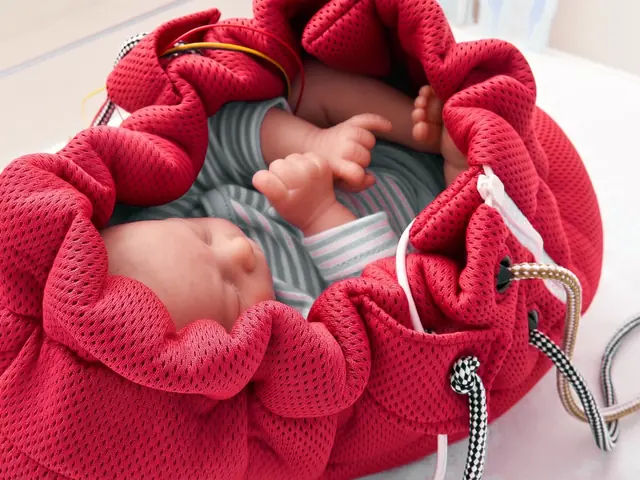
The photo is real, the baby is not: this is a preterm baby doll. We used AI only to make the doll’s skin and face look more lifelike. Everything else is photographed exactly as it was. We deliberately never show real preterm babies, to protect the children and their families.